
9 November 2026 · Giulia Campaioli, Stefania Milan #DATAGOV #GovernancebyDataInfrastructure #InfrastructuralInequalities #TransfeministDigitalCare
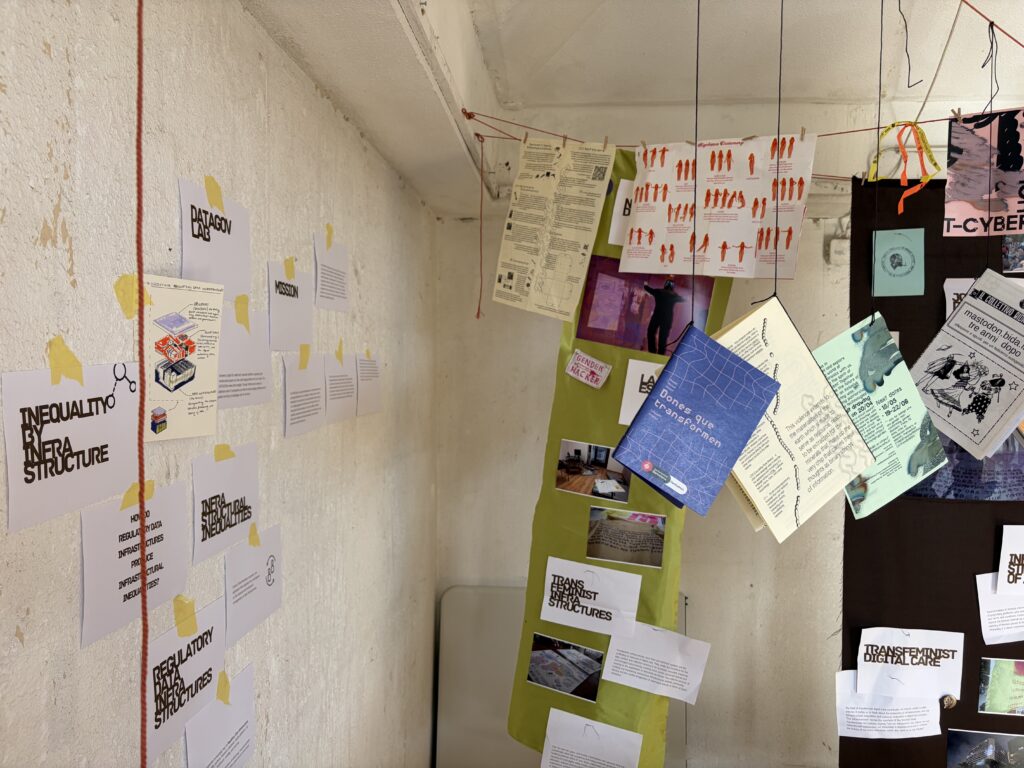
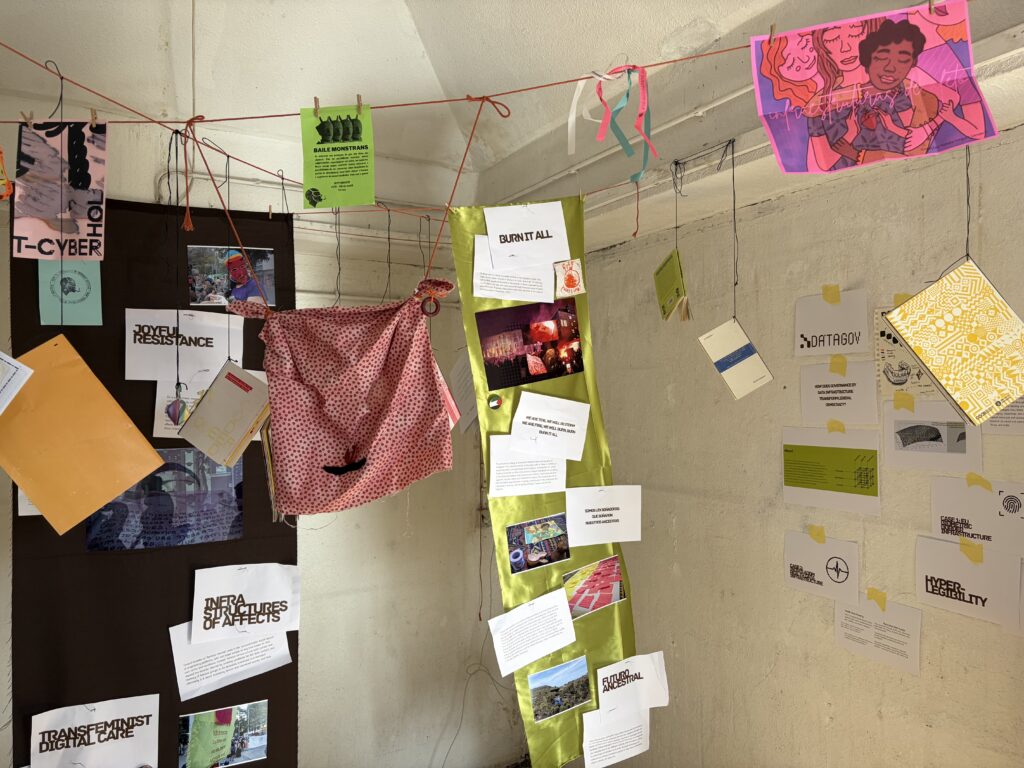
DATAGOVLab: an Interactive Installation
The first thing you see is not a screen. It’s a wall of printed photographs, hand-sewn on pieces of shiny fabric: a feminist activist wearing a balaclava, a server in a room, a street protest. Two strings attached to the walls cross in the middle of the booth, dividing the space in four quarters. Hanging from the strings, a set of fanzines about digital autonomous infrastructures, collected during fieldwork between Brazil, Spain, and Italy from Giulia’s doctoral research. At the center, the mask from the workshop Baile Monstrans, a baile funk where sewing a physical mask facilitates discussions about privacy, anonymity, and surveillance (Cryptorave, 2023, Rede Transfeminista de Cuidados Digitais). On the walls of the booth, more pictures and captions invite visitors to deep-dive into transfeminist digital care as a field of knowledge and practice interested with the inequalities embedded in data infrastructures. The aim was for the first impression to be visual and human, not technical, an invitation to look rather than a demand to engage. The captions introduced infrastructural inequalities: the idea that hardware, standards, policies and institutional arrangements can themselves decide for whom a system works and for whom it creates new barriers.
Next came a small table with more zines and the book Transfeminist Digital Care: A Holistic Approach for Tackling Online Gendered Violence, free to browse or take. The book traces technology-facilitated gender-based violence across Brazil, Spain and Italy, and maps the practices of care, knowledge production and network building that transfeminist organizations & collectives have developed in response. As shown by the Map of Internet Territories developed by the Brazilian non-profit Coding Rights, the internet is shaped by historical inequalities, and minoritized groups are often the ones baring the price. They show that infrastructural choices contribute to strengthening these inequalities, materializing and stabilizing them. This connects to the DATAGOV mission through the question: how do regulatory data infrastructure produce infrastructural inequalities?
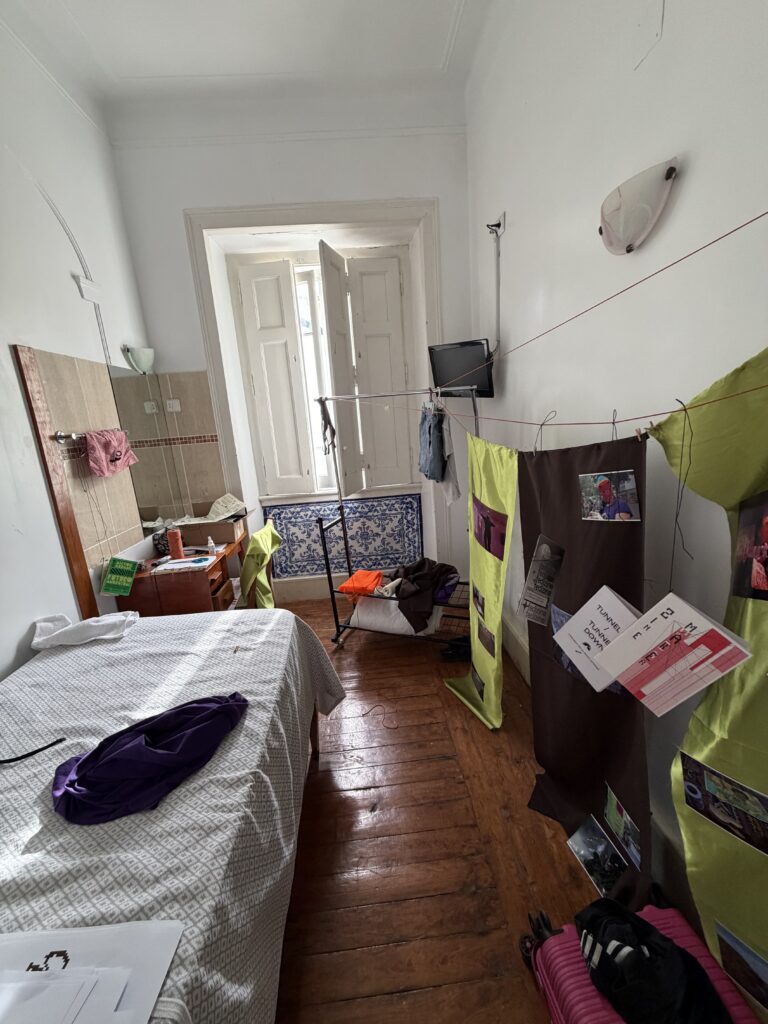
Preparing the booth interactive installation in the hotel room.
At DATAGOV, we study what we call governance by data infrastructures: the shift of decision-making from traditional bureaucracy to algorithmic data assemblages, or regulatory data infrastructures. This shift reshapes citizenship, sovereignty, and inequality, and it often happens out of public view. Global Gathering, with its focus on digital rights and tech regulation, was a natural place not just to present, but also challenge our ideas. DATAGOV is an interdisciplinary project that centers participatory methods in Brazil, South Africa, India and the EU. The booth was a small version of that approach: leaving room for people to respond in their own words.
After walking around the booth, visitors were invited to share their view on some of the questions that we investigate at DATAGOV through a survey. How do digital identity systems, biometric databases, health platforms and e-education affect the right to citizenship, the exercise of democracy, and the existence of structural inequalities? How do these assemblages of people, regulations, infrastructure and data have the power to produce inequalities? In other words, how have these technologies changed the world we inhabit? These were some of the questions that the survey asked to visitors at Global Gathering.
The DATAGOVlab is a situation-based laboratory for transformations. For us, participants are co-investigators for mutual learning in a situation where everyone can critically engage with the infrastructures that shape their lives. This foregrounds their lived experience, and works to establish participant-generated, experiential knowledge as legitimate and authoritative, on equal footing with institutional and technical expertise in decisions about governance by data infrastructure. But our situation-based Lab is still taking shape. We also asked: How can we reach people in ways that are accessible and relevant to their every day lives? Would you like to suggest formats or activities through which we can better connect with the wider public?
Through this visual and expository activity of the Lab, the DATAGOV Booth at the 2026 Global Gathering foregrounded the concept of infrastructural inequalities, meaning how data infrastructures produce structural inequalities, while also putting in practice a DATAGOVLab activity that invited reflections starting from a sensory and interactive installation.
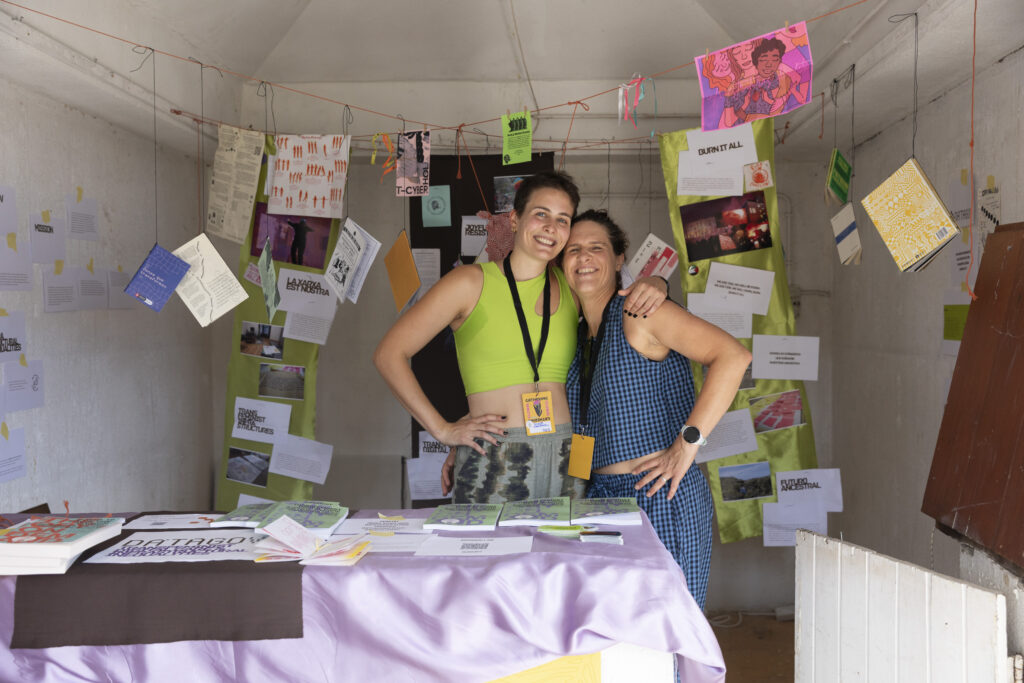
Giulia and Stefania at the DATAGOVLab booth, at Global Gathering 2026 in Estoril, Portugal. Photo by Team CommUNITY.
Stay in touch
If you did not manage to connect at Global Gathering, read the book, or want to continue the conversation, we would love to hear from you!
Freely download the book Transfeminist Digital Care: A Holistic Approach for Tackling Online Gendered Violence.
Share your view, take the survey! If you want to share your opinion, you can take the survey here.
Book launch
If you are around, join us at the next book launch events:
Rio de Janeiro, Brazil – 25/11/2026
Violências de gênero on-line e o campo dos cuidados digitais.
At Seminario de Pesquisa do IMS, UERJ, in conversation with Horácio Sívori, Denise Gomes, and João Peçanha
Amsterdam, Netherlands – 08/12/22026
Transfeminist digital care: a conversation on online gendered violence, technofeminist activism, and building better futures
At VoxPop, UvA, in conversation with Stefania Milan, Lucia Bainotti, and Natalie Kerby